
Smoke can travel
Smoke and soot may reach rooms and surfaces that were not directly touched by flames. What is affected depends on the loss and the property.
The visible burn area may be only one part of a fire loss. Heat, smoke, soot, water used during suppression, contents damage, and temporary living needs can all matter.
Smoke and soot may reach rooms and surfaces that were not directly touched by flames. What is affected depends on the loss and the property.
Furniture, clothing, electronics, household goods, and other personal property may need separate attention from the building itself.
If the home cannot be safely occupied, policy terms related to loss of use or additional living expenses may become relevant.
Follow fire-department and safety instructions. Once access is permitted, preserving photos, correspondence, receipts, and information about damaged property can help maintain a clear record of what happened.
Coverage, duties after loss, deadlines, and required documentation vary by policy and sometimes by state. This page is general education, not legal advice or a promise of coverage.
Damage to the home or covered structure itself.
Belongings inside the property may be handled differently from building repairs.
Certain policies may cover qualifying increased living costs when a covered loss makes a home uninhabitable, subject to policy terms and limits.
Actual cash value and replacement cost value can affect how covered property is valued and when amounts may be payable.
Some claim payments may reflect depreciation depending on the policy, property, and applicable rules.
The documented description of damage and work associated with the loss is an important part of understanding an estimate.
A public adjuster represents the policyholder in the property-claim process, subject to state licensing and legal limits. Depending on the situation, that work can include evaluating the loss, reviewing claim documents and estimates, documenting covered damage, and communicating with the insurer on the policyholder’s behalf. UCAG handles the claim, not the construction. We do not require you to hire a particular contractor as a condition of working with us.
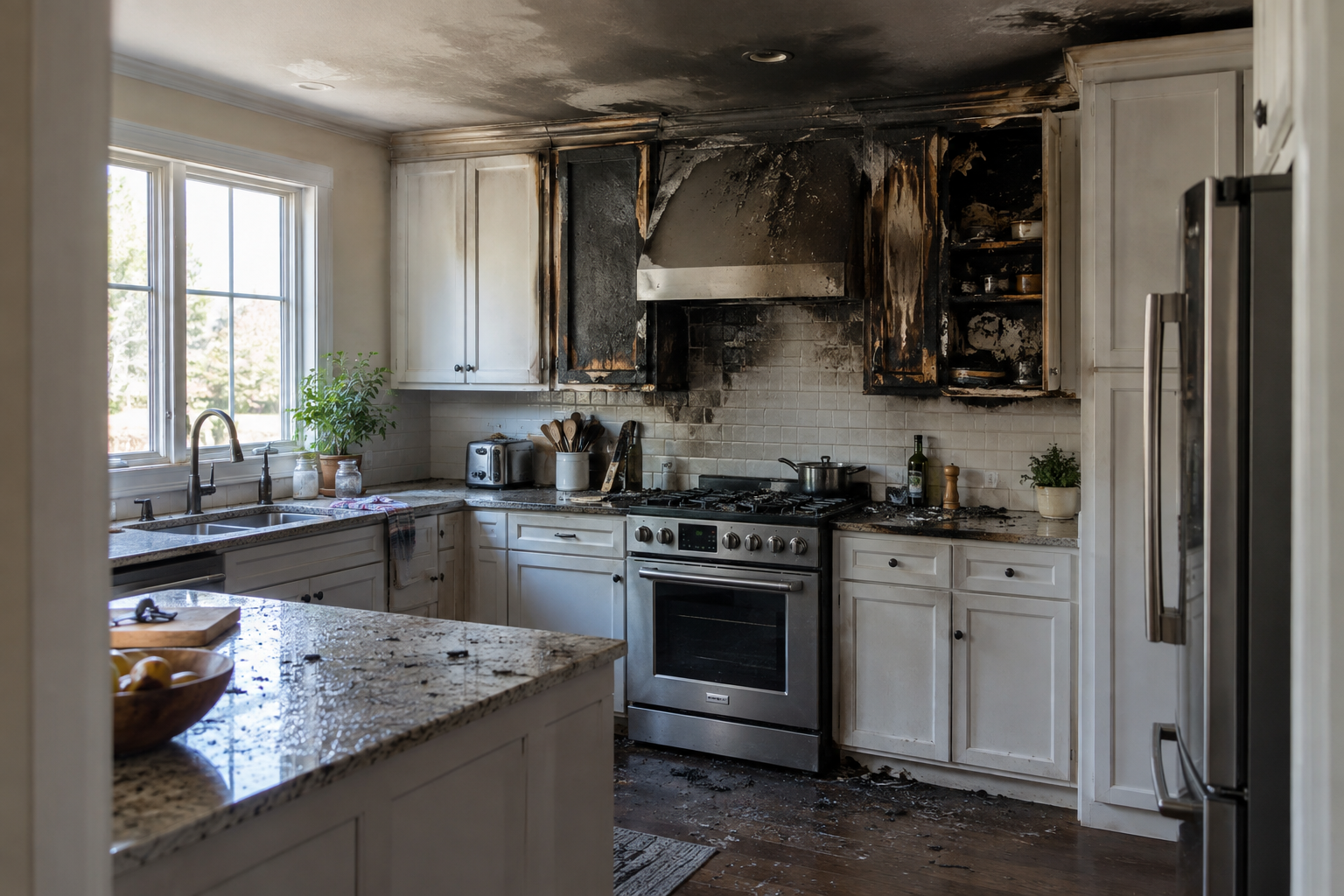
Small habits around flames, cooking and heating can reduce common ignition risks.
Keep candles and other open flames away from curtains, bedding and anything that can burn. Candles need at least 12 inches of clearance; flameless candles avoid the open flame.
Remain in the kitchen when frying, grilling or broiling. Keep towels, packaging and other combustibles away from burners.
Keep portable heaters at least 3 feet from things that can burn. Turn them off when leaving the room or going to sleep.
Test smoke alarms monthly and practice getting everyone outside to a meeting place. Keep exit paths clear.
If a fire starts, get out, stay out and call 911 from a safe location. Do not delay escape to protect property.
Schedule your free consultation today.